
Miner GO!
SeikamiArcade
4.589.00 Reviews
- Version
- 0.1.4
- Installs
- 50.00K
- Age Rating
- Everyone
Screenshots
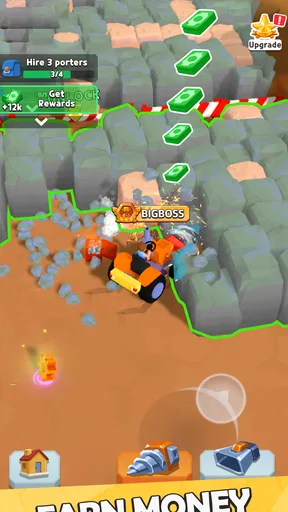
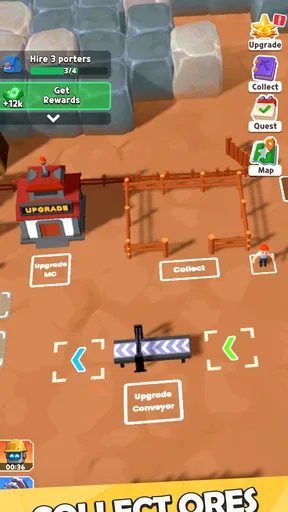
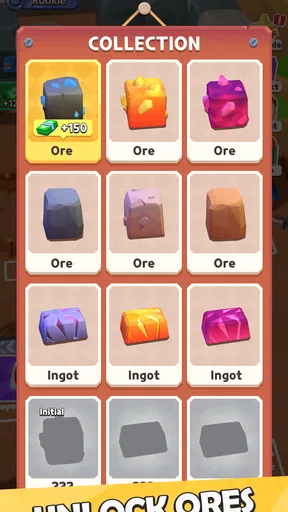
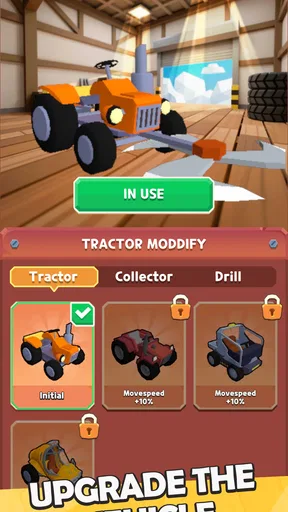
Our Review of Miner GO!
 Analysis by Appyee
Miner GO! is a small arcade game with a clear, satisfying loop: dig for resources, sell what you collect, and spend the proceeds on improvements. I found it easiest to enjoy when I treated each session as a short management puzzle rather than expecting a deep mining simulation. The appeal comes from deciding what to do with limited progress, watching a modest operation become more efficient, and returning for another quick run.
That simplicity is also the game’s main limitation. It does not appear designed for players who want a large story, complicated controls, or a highly detailed economic model. Instead, Seikami has focused on an accessible idea that works well on a phone: make a few decisions, see the result quickly, and stop whenever you have had enough. My overall view is positive, but specific. This is a good choice for casual arcade players who like incremental progress; it is less convincing for anyone looking for a long-form strategy game.
What the mining loop feels like in practice
The basic rhythm is easy to understand from the first session. I dig, gather resources, sell them, and use the return to improve the operation. Each part supports the next, so the game rarely leaves me wondering what its immediate purpose is. That clarity matters on mobile, where I may only have a few minutes available and do not want to study a complicated interface before making progress.
The strongest part of the design is the connection between action and upgrade. Selling is not just a final step; it gives every successful run a practical consequence. When I decide whether to continue gathering or invest in an improvement, the choice feels more meaningful than simply collecting points. The game turns a familiar arcade activity into a compact progression loop without burying it under unnecessary explanation.
I also like that the concept suits different session lengths. A quick check-in can be enough to make a sale or work toward an upgrade, while a longer sitting lets me pursue a more deliberate improvement plan. That makes it a natural fit for commuting, waiting rooms, or a short break. It is not a game I need to reserve an entire evening for, and that is one of its most useful qualities.
There is a quiet strategic question underneath the straightforward controls: should I prioritize immediate returns or improvements that may make later runs more productive? Even without a complicated rule set, that choice gives the loop some texture. I found myself paying more attention to the timing of purchases once I stopped treating every reward as something to spend immediately.
Why the upgrade decisions matter more than the digging
The digging is the visible activity, but the upgrade economy is what keeps me engaged. A mining game can become repetitive if collecting is the only source of satisfaction. Here, the sense of progress comes from turning a basic operation into something more capable. The best moments are not necessarily the individual digging actions; they are the points where an improvement changes how worthwhile the next cycle feels.
My practical advice is to avoid spending automatically after every sale. I had a better experience when I paused to consider whether an upgrade would help my next few actions or merely provide a short-lived feeling of progress. That small habit makes the game feel more like managing a growing operation and less like tapping through a reward sequence.
Another useful approach is to play in focused bursts. Instead of opening the game repeatedly without a goal, I found it more satisfying to begin a session with a simple intention, such as building toward an improvement or generating enough resources for a particular purchase. This gives the otherwise compact loop a sense of direction and reduces the chance that the repetition will feel aimless.
The game’s strongest evidence of good design is that these decisions emerge naturally from its central loop. I did not need a long tutorial to understand the relationship between digging, selling, and upgrading. That makes it approachable for younger players and for adults who prefer games that explain themselves through play.
A useful fit for short, ordinary moments
Imagine having ten minutes before an appointment. A large strategy game would ask too much of you, while a purely reflex-based arcade title might feel disposable. Miner GO! sits between those choices. I can open it, work through a small mining cycle, sell the result, and leave with a clear sense that the session accomplished something. When I return later, the progression remains easy to understand.
That scenario also shows where the game is most comfortable. It rewards attention, but not constant concentration. I can make meaningful choices without needing to memorize a large map or track several complicated systems at once. For phone play, that balance is valuable.
It is worth keeping expectations realistic, though. The loop’s accessibility comes from its limited scope. Players who need frequent surprises, elaborate missions, or a strong narrative may find the experience too narrow. The same structure that makes it convenient also means that its novelty depends on how much enjoyment you get from improving a repeated process.
Where the experience is strong and where it slows down
As an arcade game, Miner GO! benefits from having an immediately readable objective. There is no need to learn a fictional world before understanding what success looks like. The mining theme gives the actions a coherent identity, while the sell-and-upgrade cycle supplies a reason to continue. I appreciate that the game does not confuse simplicity with a lack of purpose.
The presentation also seems well matched to the intended audience. The content rating is Everyone, and the straightforward resource-management premise makes it approachable for a broad range of players. I would still distinguish “easy to start” from “equally engaging for everyone”: younger or casual players may enjoy the clear rewards, while experienced management fans may want more depth than this compact format provides.
Its reception is encouraging without being a reason to ignore personal taste. The game holds a 4.5 average from around 761 ratings, with roughly 89 written reviews, and has passed 50K installs. Those figures suggest that the central idea is connecting with a meaningful audience. They do not change my main conclusion: the right question is whether you enjoy incremental arcade progression, not whether the game can replace a full-scale simulator.
One of the more important trade-offs is the relationship between free access and optional spending. The game is free to play, while in-app purchases are listed at $4.99 per item. That makes it easy to try without committing money first, but players who are sensitive to purchase prompts should decide in advance whether they want to spend at all. I prefer approaching this kind of game with a personal limit, because the satisfaction should come from planning upgrades rather than feeling pushed into buying progress.
The current version is 0.1.4, which is worth keeping in mind when judging the game’s scope. A version at this stage can feel more like a focused foundation than a fully expanded arcade economy. I would not choose it expecting the breadth of a mature mining simulator. I would choose it because the central loop is understandable, lightweight, and easy to revisit.
The friction that may decide whether you keep playing
Repetition is the clearest weakness. Digging, selling, and upgrading is a pleasant loop, but its appeal depends on whether each improvement feels sufficiently different from the previous one. If you need constant mechanical variety, the structure may begin to feel predictable before you have reached the point you hoped for.
There is also a risk that the economic decisions feel more apparent than deep. The loop invites planning, but a player looking for several competing strategies may eventually want more consequences from each choice. I enjoyed thinking about when to invest, yet I would not describe the game as a substitute for a detailed resource-management title with many interacting systems.
The free-to-play model creates another point of friction. Even when optional purchases are not necessary for enjoyment, their presence can affect how some players perceive the pace of progress. My recommendation is simple: try the core loop first and judge whether its normal rhythm feels rewarding before considering any purchase. If the early progression already feels too slow or repetitive, spending will not solve the underlying mismatch.
Compared with a traditional reflex arcade game, this title gives me more reason to think but less moment-to-moment intensity. Compared with an idle mining game, it feels more active because my decisions are tied to the digging and selling cycle rather than only waiting for accumulation. Compared with a full management simulator, it is much easier to understand but correspondingly lighter in depth. That middle position is its identity, not a flaw by itself.
Small habits that make the game more enjoyable
I recommend setting a purpose for each session. “Collect as much as possible” is vague, while “work toward the next improvement” gives the run a clear endpoint. This is especially helpful when the game starts to feel repetitive, because it turns a series of similar actions into a short-term plan.
I also found it useful to separate earning from spending mentally. Selling creates the opportunity to improve, but it does not mean every reward should disappear immediately. Waiting briefly and comparing the likely value of different improvements makes the operation feel more deliberate. This is a small workflow, but it is one of the few ways to add personal strategy to a deliberately simple game.
Finally, I would avoid using it as a replacement for every kind of mobile entertainment. It works best beside other games, not necessarily as the only game on a phone. A player can use it for relaxed progression, then switch to something more narrative or competitive when the mining loop has delivered all the satisfaction it can.
Who should download it and who should skip it
I would recommend Miner GO! to players who enjoy visible progress, uncomplicated resource decisions, and short arcade sessions. It is particularly suitable if you like the feeling of turning small gains into a more efficient routine. The Everyone rating and free entry point also make it a reasonable game to try with family members who prefer clear objectives over complicated controls.
It is a good match for someone who wants a low-pressure game to open between other activities. The mining theme gives the experience more personality than an abstract upgrade screen, while the compact loop keeps the learning curve gentle. If you enjoy checking whether a new improvement changes the value of your next run, there is enough structure here to hold your attention.
I would be more cautious for players who want a substantial campaign, competitive multiplayer, deep simulation, or a large variety of mechanics. Nothing about the core concept suggests that those are the main attractions. Those players may be better served by a dedicated strategy or simulation game, even if it takes longer to learn and demands more time per session.
I would also skip it if you dislike games built around repeated accumulation. The theme may be appealing, but the central activity remains a cycle of gathering, selling, and improving. No amount of enthusiasm for mining will make that structure feel varied if incremental repetition is not your kind of entertainment.
Device compatibility is relatively broad: the game supports Android 7.1 and later. That makes it accessible on older compatible devices, although the actual comfort of play will still depend on the phone’s screen and general responsiveness. Since the game is designed around a focused arcade loop rather than a complicated control scheme, it should be easy to understand even for someone who does not regularly play mobile games.
For families, the Everyone rating is reassuring from a content standpoint, but I would still explain the optional purchase model to younger players. A free game can be started without payment, yet individual in-app items cost $4.99. Setting expectations before handing over a device is a sensible way to keep the experience relaxed.
For returning players, the best question is not whether the game has an enormous amount to do, but whether improving the mining operation remains satisfying. If the answer is yes, the compact design works in its favor. If the answer is no, the limited loop will become noticeable quickly, and a broader arcade or simulation alternative will probably be a better use of your time.
My verdict after looking past the simple premise
Miner GO! succeeds because it understands the value of a clean mobile loop. Digging gives me an immediate task, selling gives the task a reward, and upgrading gives the reward a future purpose. That chain is easy to grasp and flexible enough for short sessions, which makes the game more appealing than its minimal premise might suggest.
At the same time, I would not oversell its ambition. The experience is focused rather than expansive, and that focus can become repetition for players who need constant novelty. The optional $4.99 purchases also deserve a thoughtful approach, especially for anyone who prefers completely frictionless free-to-play games.
Seikami’s arcade game is best understood as a modest, approachable progression title. I would install it when I wanted something lighter than a strategy simulator but more purposeful than a purely reflex-driven game. The free price makes trying it straightforward, and the broad age rating makes its basic concept easy to share. Just come in expecting a compact mining routine, not a sprawling resource empire.
My recommendation is to try it if you enjoy turning small arcade actions into steady improvements. Give the first sessions enough attention to see whether the upgrade decisions genuinely interest you. If they do, the game can become a pleasant part of a casual mobile rotation. If you are searching for deep systems, dramatic variety, or a long campaign, I would choose a more substantial alternative instead.
Verdict
Strengths of Miner GO!
- Simple controls make it easy to start mining immediately.
- Short sessions suit quick play breaks on mobile devices.
- Mining upgrades provide a clear sense of progression.
- Bright visuals make resources and hazards easy to recognize.
- Casual gameplay is suitable for players of different ages.
Limitations of Miner GO!
- Progress can feel repetitive after extended play sessions.
- Some upgrades may require considerable time to unlock.
- The interface can feel crowded on smaller phone screens.
- Limited strategic depth may not satisfy experienced players.
- Performance may vary on older devices during busy scenes.
Other Releases by Seikami
View All
Lumber GO!
Arcade4.5
Similar Picks in This Category
View All
Subway Surfers
SYBO Games4.6

Stickman Party 234 MiniGames
PlayMax Game Studio4.6

Subway Princess Runner
Ivy4.4

Temple Run
Imangi Studios4.2

Zombie Tsunami
Mobigame SAS4.6

Stack Ball - Crash Platforms
CASUAL AZUR GAMES4.5
Frequently Asked Questions
What is Miner GO! and how does the gameplay work?
Miner GO! is a casual mining game focused on digging, collecting resources, and improving your operation over time. You typically guide your miner through underground areas, gather valuable materials, unlock upgrades, and use your earnings to progress more efficiently. The gameplay is easy to understand, making it accessible for short sessions, although later stages may require more strategic upgrade choices and patience.
Is Miner GO! free to download and play?
Miner GO! can generally be downloaded and played without an upfront purchase, but the game may include optional in-app purchases. These purchases can provide extra currency, boosts, or other advantages, while normal progression remains available through regular gameplay. Before downloading, users should check the store listing for the latest pricing information and review whether advertisements or paid items are included on their device.
Does Miner GO! require an internet connection?
The basic mining experience in Miner GO! may be available during offline play, which is useful when you want to play without mobile data or Wi-Fi. However, certain features can depend on an internet connection, including advertisements, online rewards, cloud synchronization, updates, or purchases. Availability may vary by version and platform, so it is best to test offline access after installation.
Is Miner GO! suitable for children and younger players?
Miner GO! uses simple controls and a colorful, non-violent mining theme, so it can be approachable for younger players. Nevertheless, parents should review the game’s age rating, advertising content, and in-app purchase settings before allowing children to play. If the game offers optional purchases or reward videos, enabling parental controls can help prevent accidental spending and limit unsuitable advertising.
What should I know about ads, purchases, and device performance in Miner GO!?
As with many free-to-play mining games, Miner GO! may use advertisements to support the free version and may offer optional purchases for faster progress or additional resources. Performance should be comfortable on most modern Android and iOS devices, although older phones may experience slower loading or reduced responsiveness. Keeping the app updated and maintaining sufficient storage can help ensure a smoother experience.
Play our best games!


